Marstons Mills Cranberry Bog Eco-Restoration Project
Comprehensive Study Area
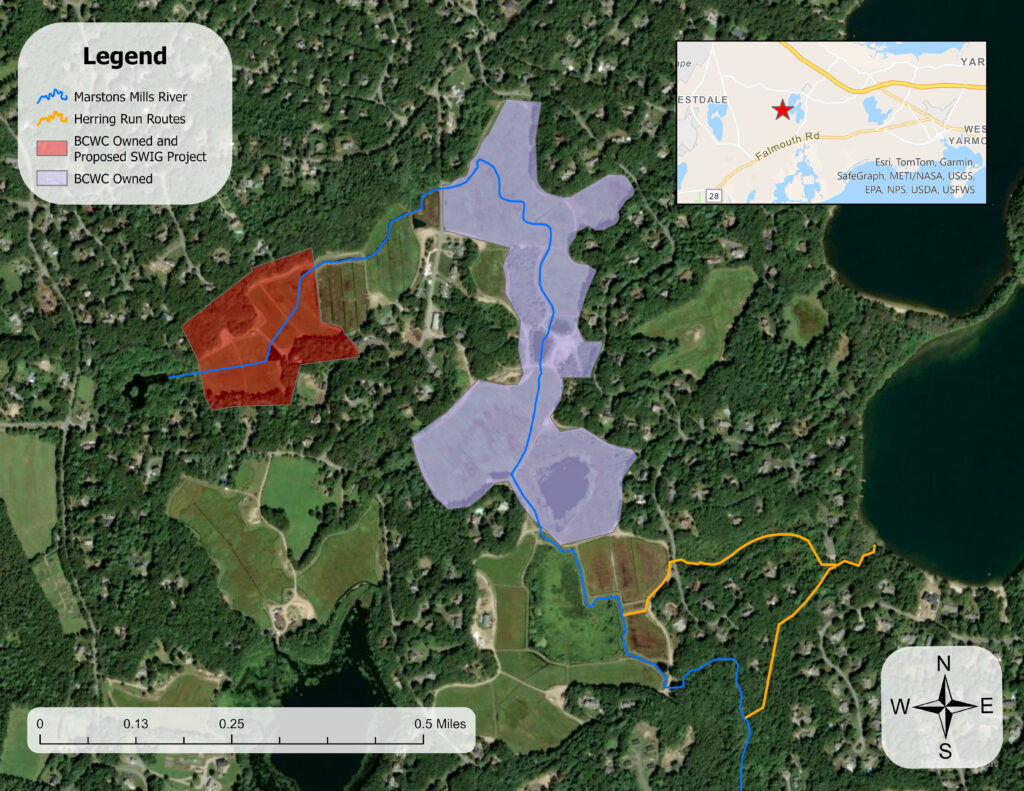
The CSA is highlighted in red and the 47-acre eco-restoration site is highlighted in purple.
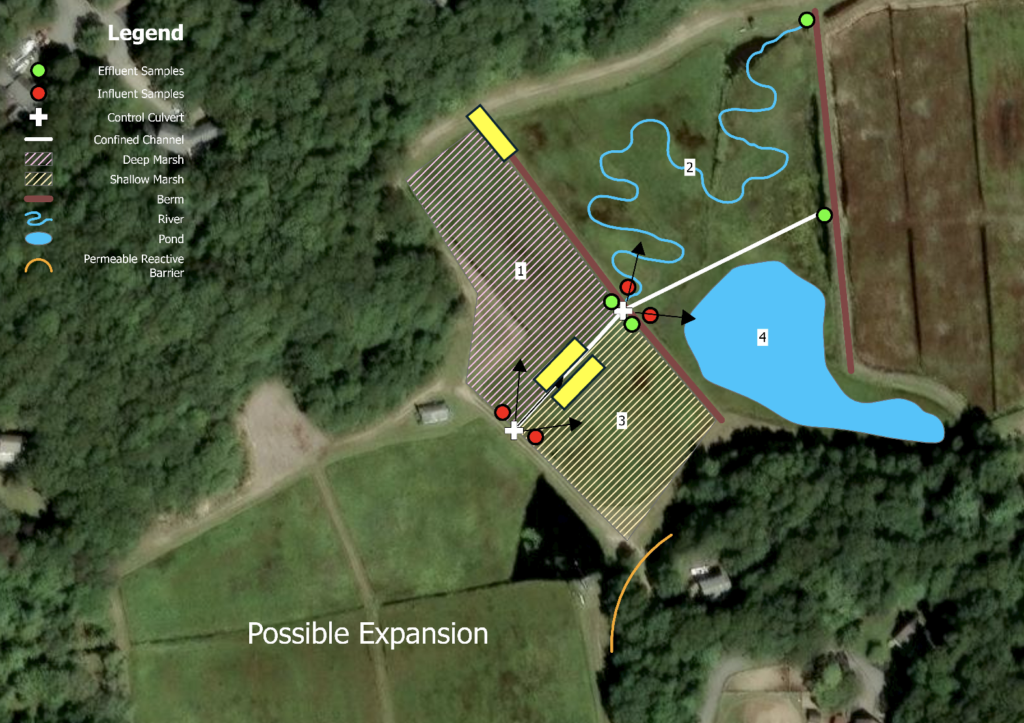
This image shows a preliminary design of the CSA, which includes: 1. deep marsh (subsurface flow wetland), 2. sinuous stream, 3. shallow marsh (shallow emergent wetland), 4. shallow pond
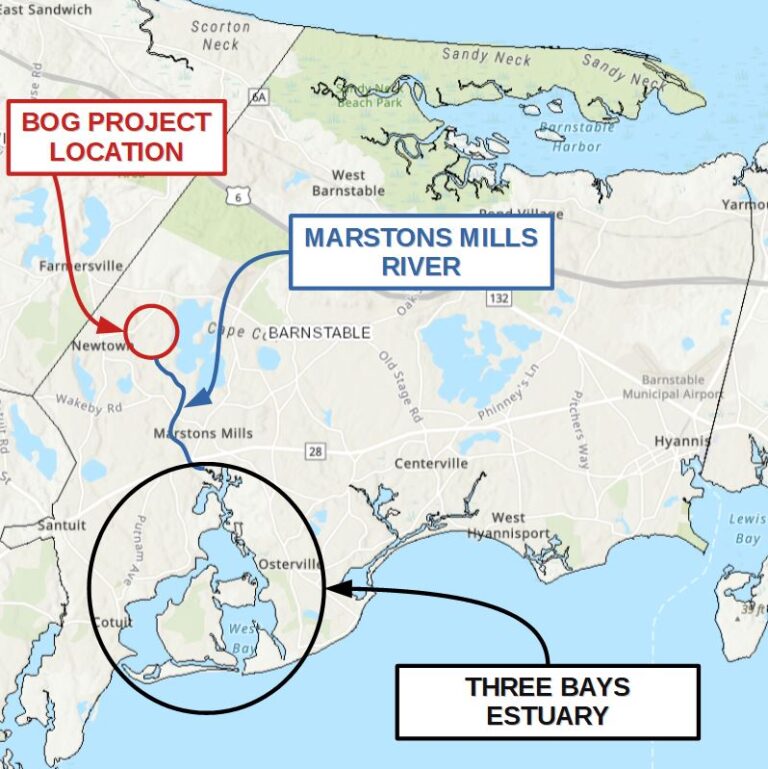
Barnstable Clean Water Coalition (BCWC) is pursuing a multi-stage ecological restoration of 64-acres of retired cranberry bogs in Marstons Mills. The Comprehensive Study Area (CSA) is a 10-acre portion of these bogs that will be used to develop a comprehensive “toolbox” for regional cranberry bog restorations. This test area is located near the headwaters of the Marstons Mills River (MMR). The MMR transits cranberry bogs, swamps, and a pond before entering the Three Bays estuary, the third most impaired estuary on Cape Cod due to nitrogen pollution. The excess nitrogen contaminating the groundwater is mainly from household septic systems. Fed by this groundwater, the river flow reaches the estuary in just six to eight hours.
This project will provide an opportunity to study different approaches to cranberry bog restoration for the purposes of nutrient attenuation from a cost/benefit perspective. The plan being developed will design, build and monitor side-by-side restoration approaches in discreet miniature parcels within the CSA. These parcels will include shallow marsh, deep marsh, sinuous stream with associated wetlands, a pond, a wood chip Permeable Reactive Barrier and possibly an area with recirculated water using solar power. Each of these parcels would be “sized” based on water flow and separated in a manner that would allow for input and output measurements and monitoring. Each parcel would be carefully budgeted in terms of time and cost to both “construct” and “operate”.
This restoration and study will take approximately six years to complete and will result in an “eco-restoration roadmap”. Cost estimates for each unique approach will be applicable to other cranberry bog restorations and river systems on the Cape and across southeast Massachusetts.
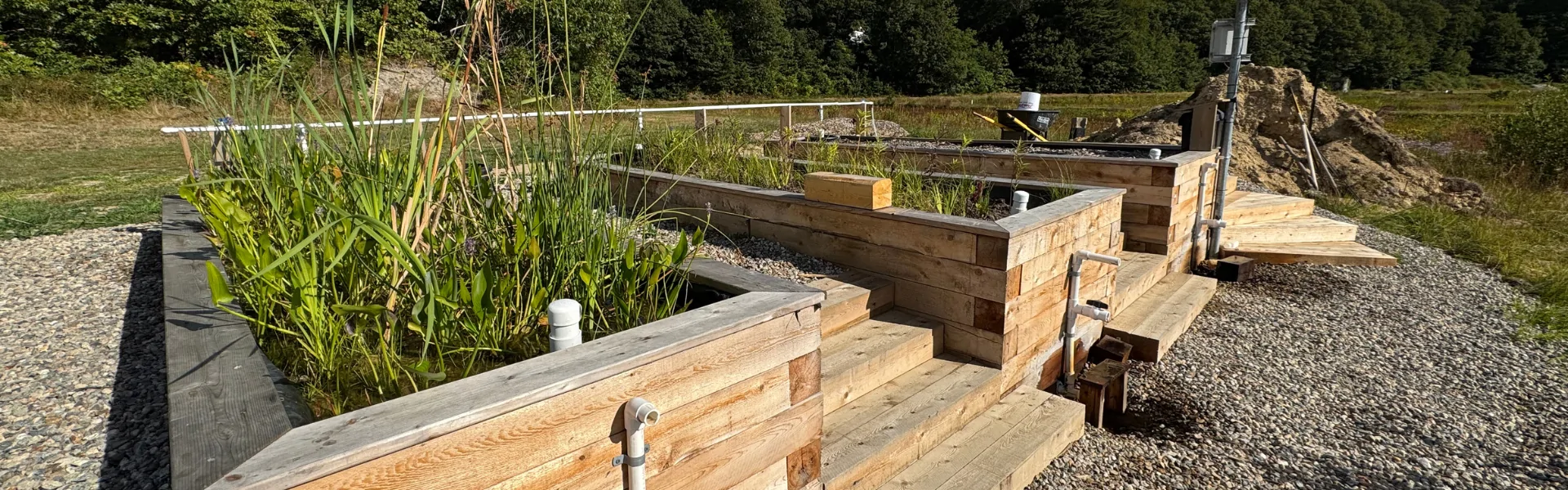
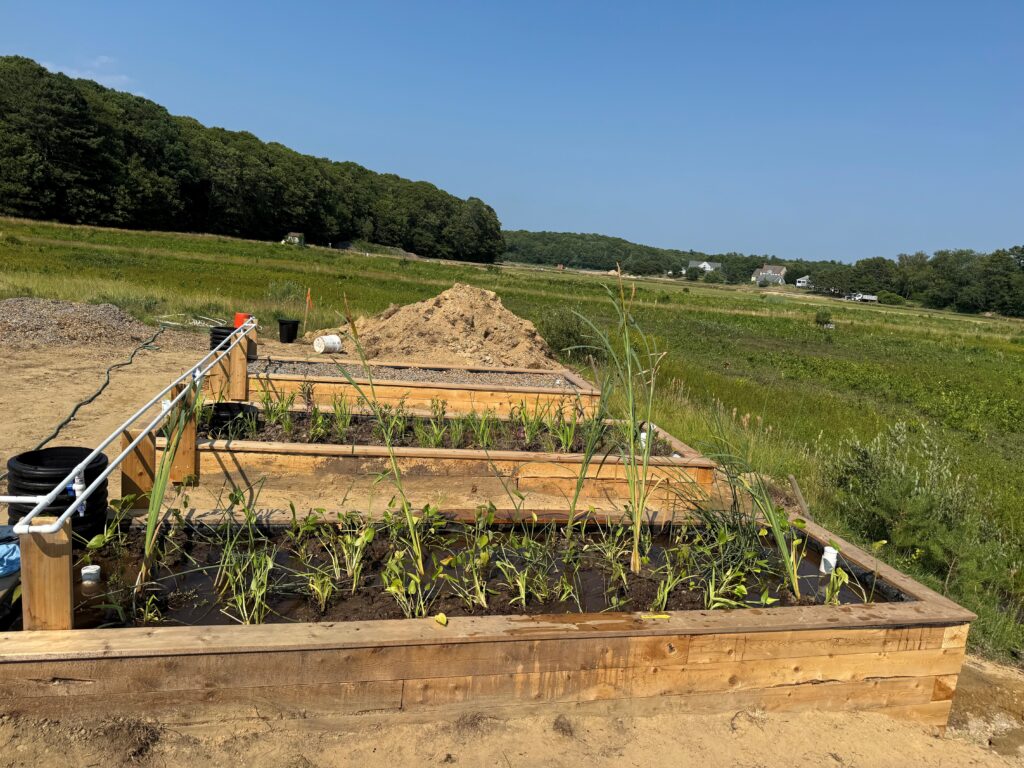
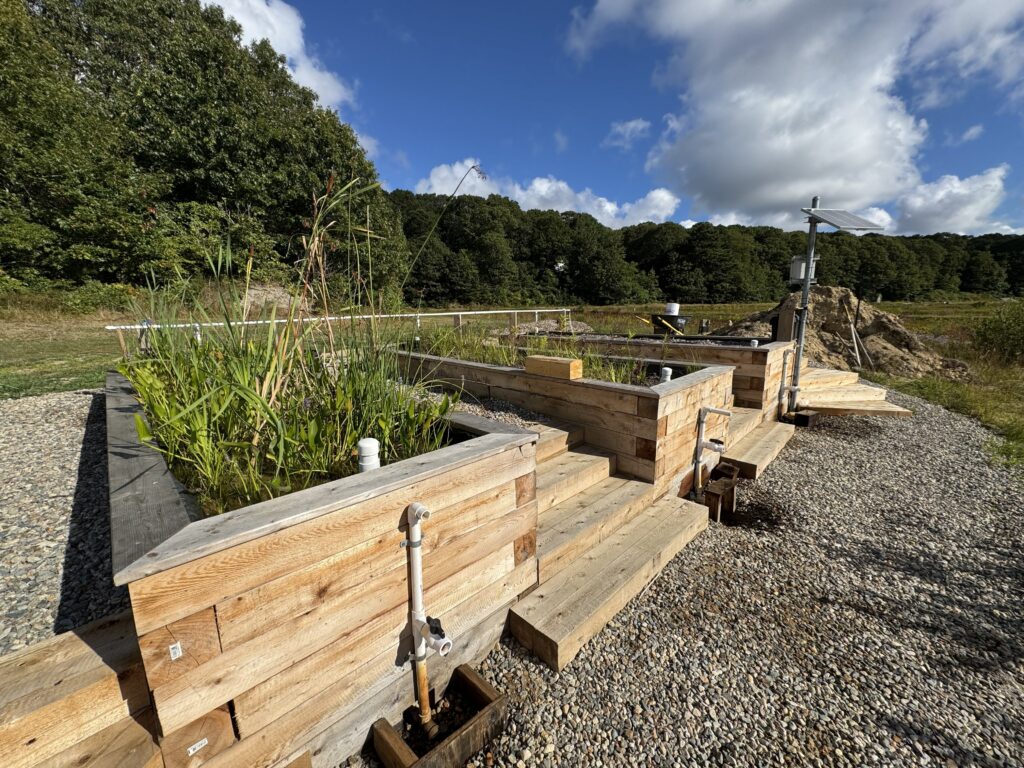
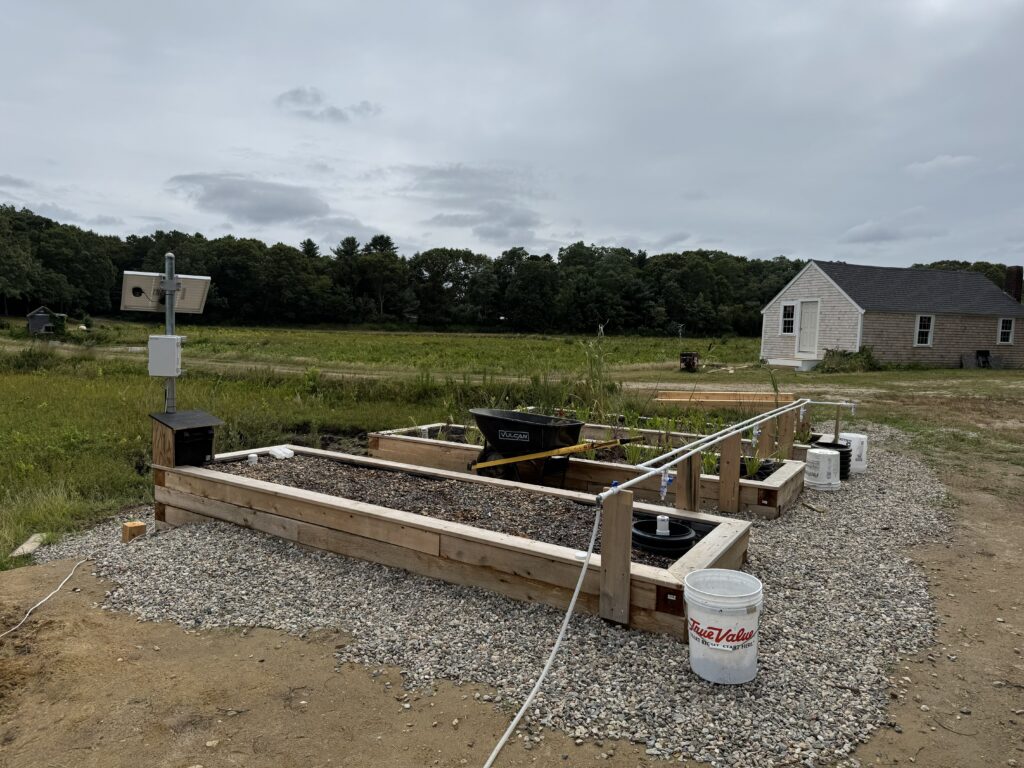
As part of the eco-restoration of the Marstons Mills cranberry bogs, BCWC is using mesocosms to compare the effectiveness of various wetland designs in removing nitrogen from the water flowing through the bogs. Mesocosms are smallscale experimental systems that recreate a natural ecosystem. Led by Water Resources Consultant Scott Horsley, three mesocosm structures were built adjacent to the bogs that are within the Comprehensive Study Area (CSA).
These 12 ft. long by 3 ft. wide and 3 ft. deep cells simulate different wetland restoration designs, allowing us to measure nitrogen removal in a controlled, reproducible environment. Groundwater is pumped from a 30-foot deep well into all three mesocosms. Flow and residence time are controlled through a fixed hydrologic system with the water being tested as it flows in and out of each mesocosm. The findings will help determine which wetland designs are more effective at nitrogen attenuation. This data will inform the design of BCWC’s CSA project, as well as being used for bog restorations in other locations.
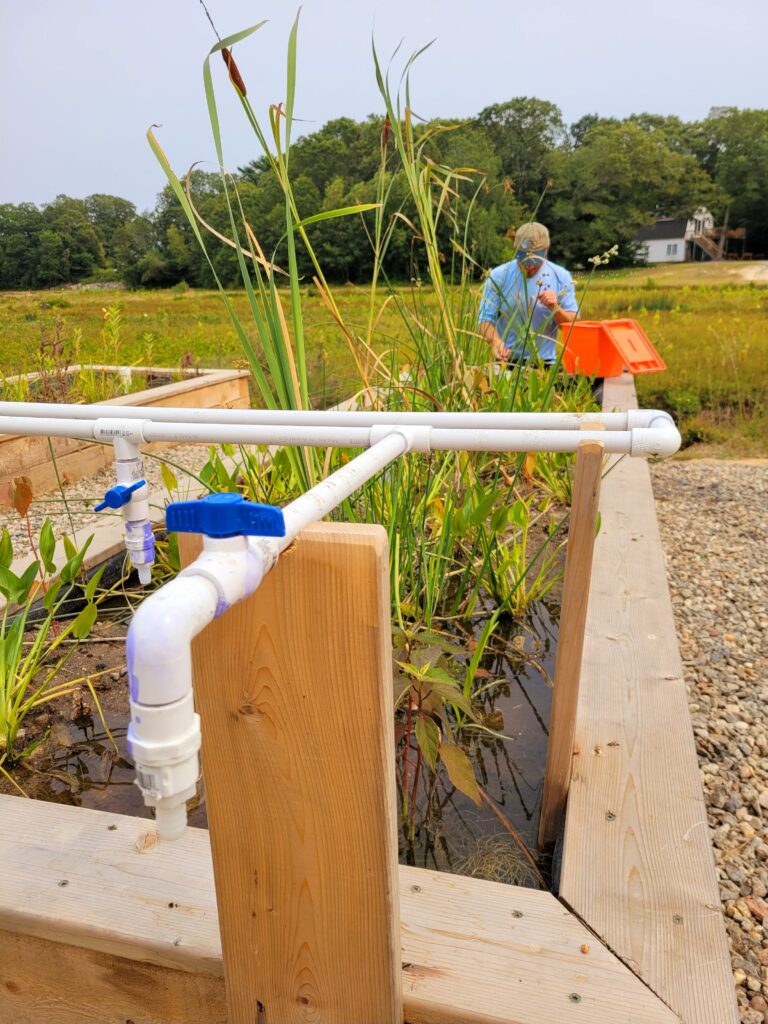
Each mesocosm receives groundwater pumped every two hours through a PVC manifold, which distributes consistent flows across the system. Water levels are managed through a three-tier adjustable outlet system, allowing our team to fine-tune depths and residence times to simulate real-world wetland conditions. This control is essential for understanding how long water must stay within each system to maximize nitrogen removal.
The shallow emergent and subsurface flow wetland mesocosms each receive two gallons of groundwater per cycle, totaling approximately 24 gallons per day. This translates into a residence time of several days, meaning water remains in the system long enough for both plants and microbes to process nitrogen effectively.
The Three Bays estuary was determined to be one of the most impaired estuaries on the Cape. Excess nutrients like nitrogen come from septic systems, stormwater and fertilizer, which cause algal blooms, fish kills and unsafe water for recreation. Barnstable Clean Water Coalition has been collecting water samples and associated data for years. Approximately 40% of the watershed’s excess nitrogen load flows through the Marstons Mills River. At the headwaters of the Marstons Mills River is approximately 150 acres of cranberry bogs. Our water quality data at the bogs shows that more than 8,000 kgs of nitrogen flows out from them into the Three Bays Watershed each year. The bogs are a collection area for the groundwater from much of the surrounding residential developments. The bogs could play a vital role in reducing the nitrogen load in our watershed.
To address water pollution in the Three Bays Watershed, BCWC is restoring 64 acres of retired cranberry bog farmland near the headwaters of the Marstons Mills River. Our goal is to reduce nitrogen loading to the Three Bays estuary by restoring this site to healthy, self-sustaining, and dynamic wetlands like those on Cape Cod pre-dating cranberry farming.
As part of this restoration, we are using mesocosms as a way to compare various wetland designs which more effectively reduces nitrogen. A mesocosm is a small-scale experimental system recreating a natural ecosystem for research, which in this case is nitrogen reduction. The results will determine which design is best for the larger restoration.
How does it work?
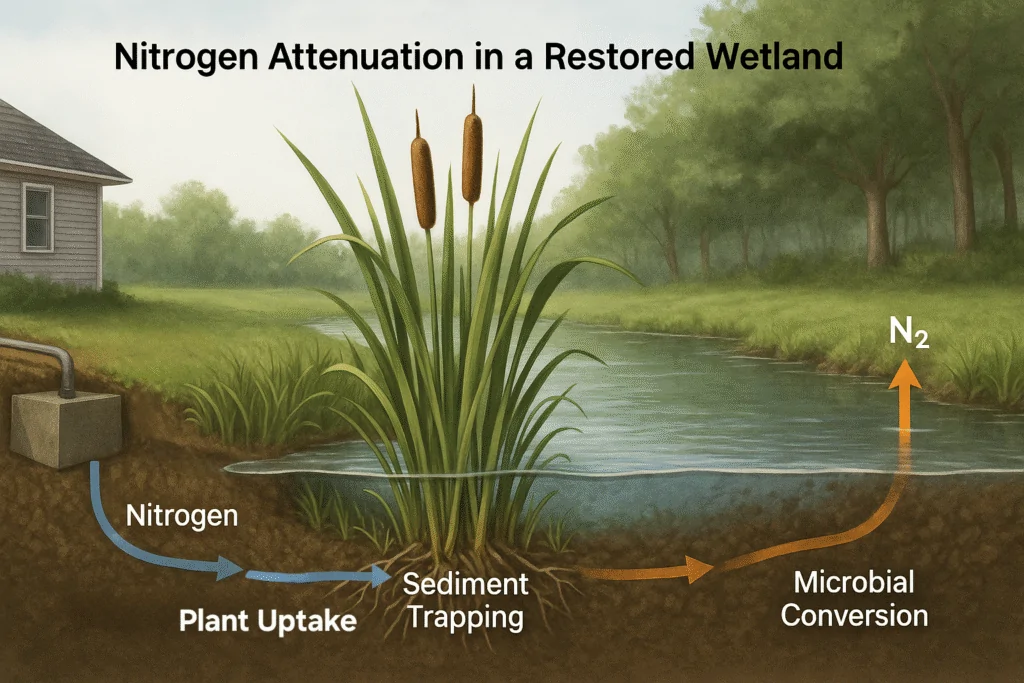
Two of the mesocosms contain soil from the bogs which includes sandy peat. This peat provides a perfect habitat for microorganisms that remove nitrogen from groundwater by turning it into harmless nitrogen gas. Peat is a dense bed of organic material found in the lower layers of the bogs. As the groundwater moves through these systems, the mixture of peat and microorganisms act as an organic filter, removing nitrogen and other pollutants.
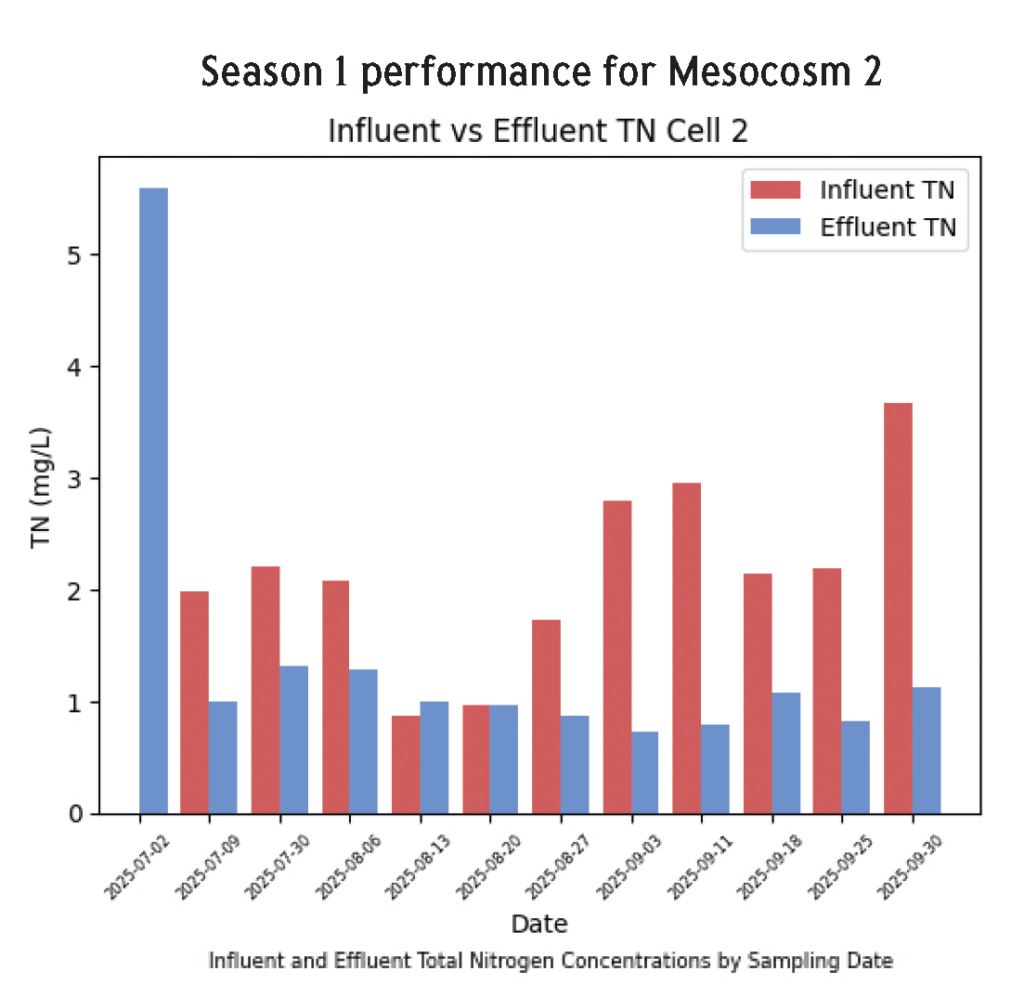
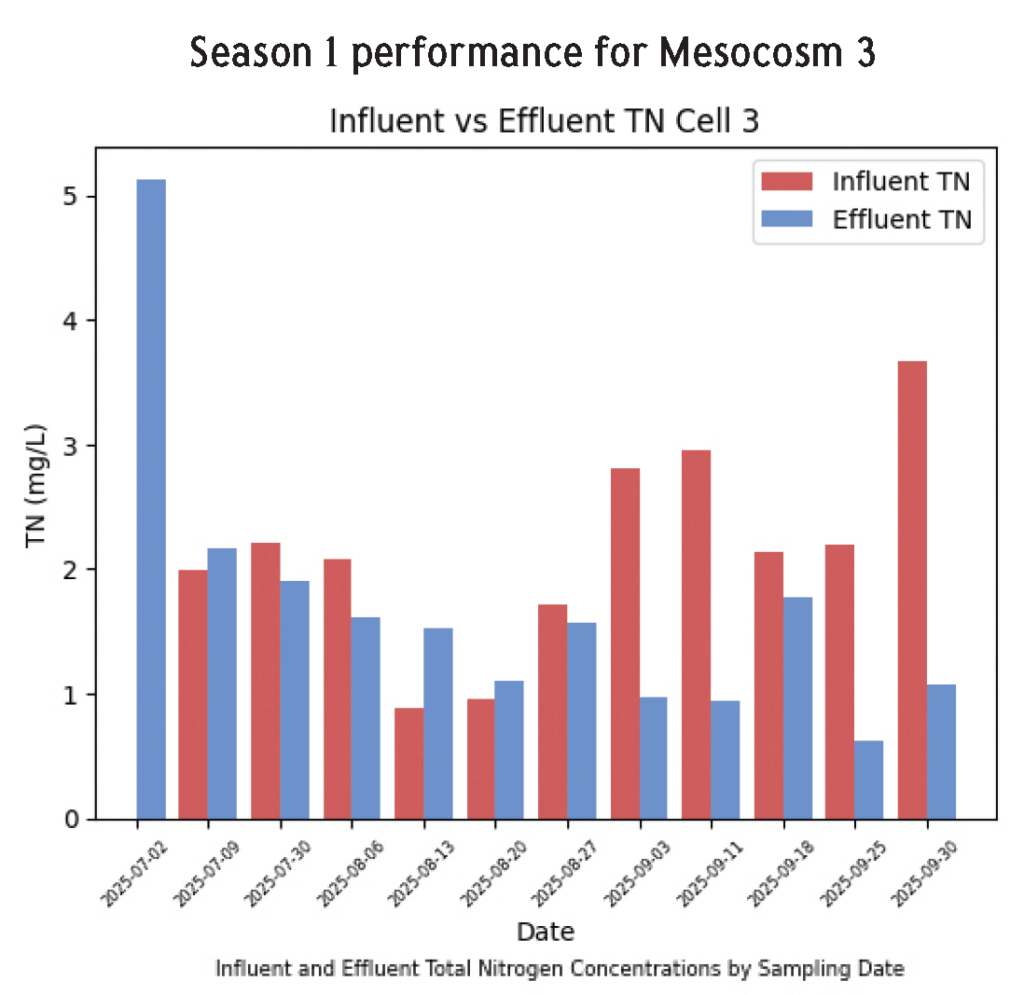
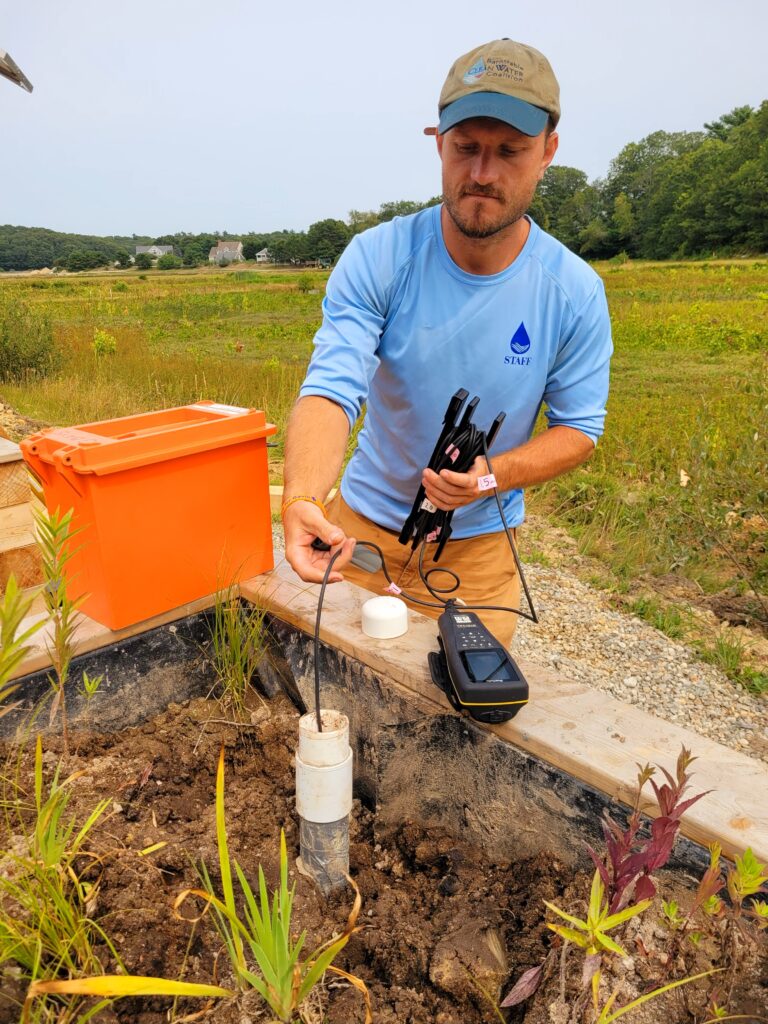
We take weekly samples of the “influent” (before filtration) and “effluent” (after filtration).
Shallow Marsh Wetland
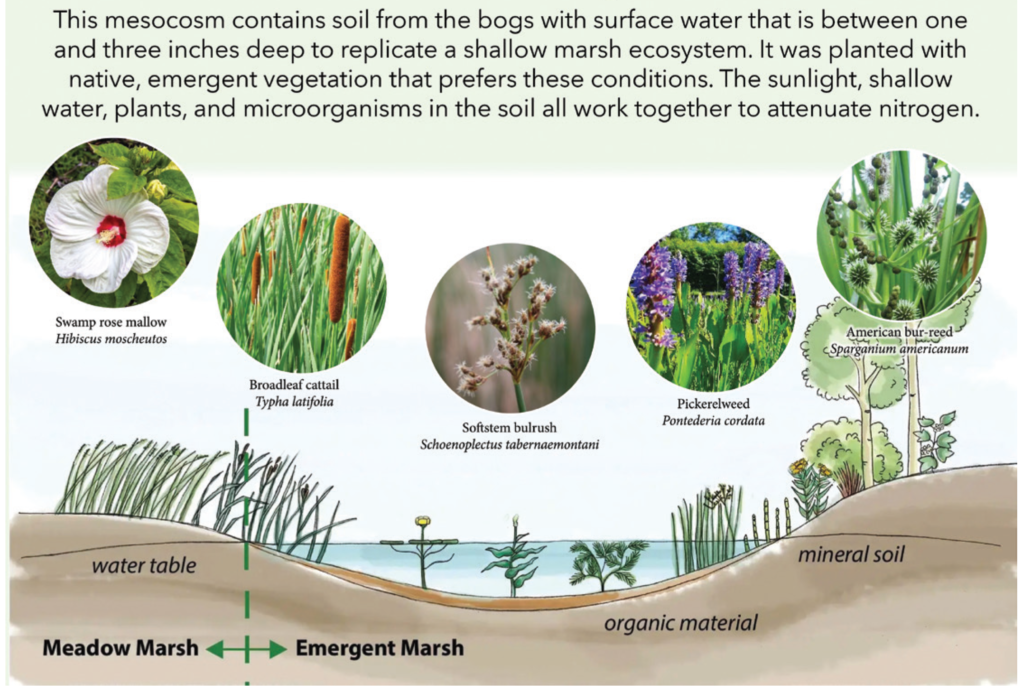
This mesocosm contains soil from the bogs and water that is between 1 and 3 inches deep to replicate a shallow marsh ecosystem. This system includes plants that thrive in shallow marsh conditions.
Includes plants:
Swamp rose mallow Hibiscus moscheutos
Swamp
Broadleaf cattail Typha latifolia
Pickerelweed Pontederia cordata
Softstem bulrush Schoenoplectus tabernaemontani
Deep Marsh Wetland
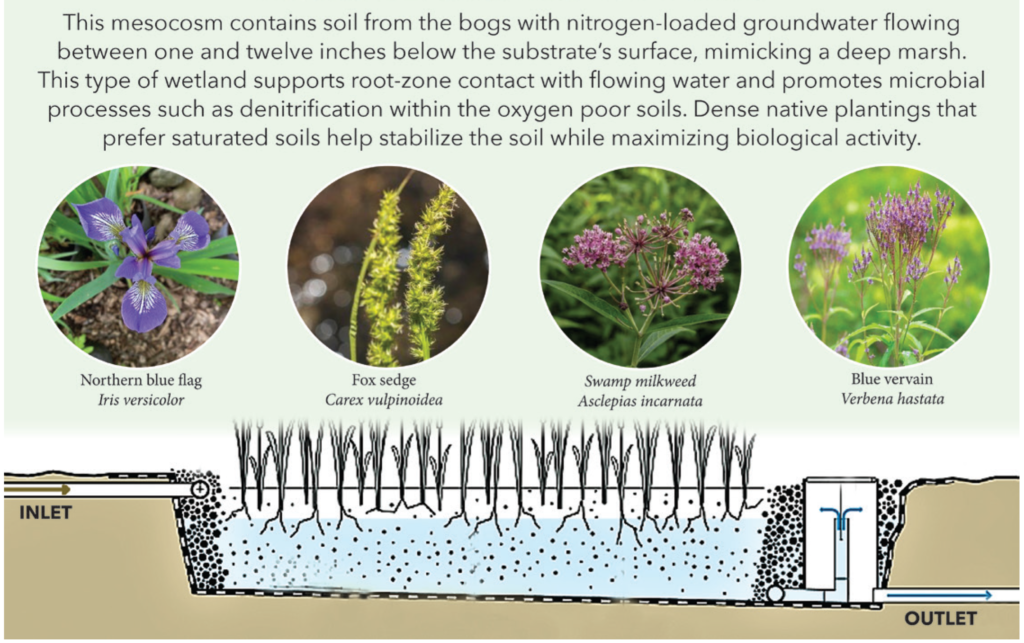
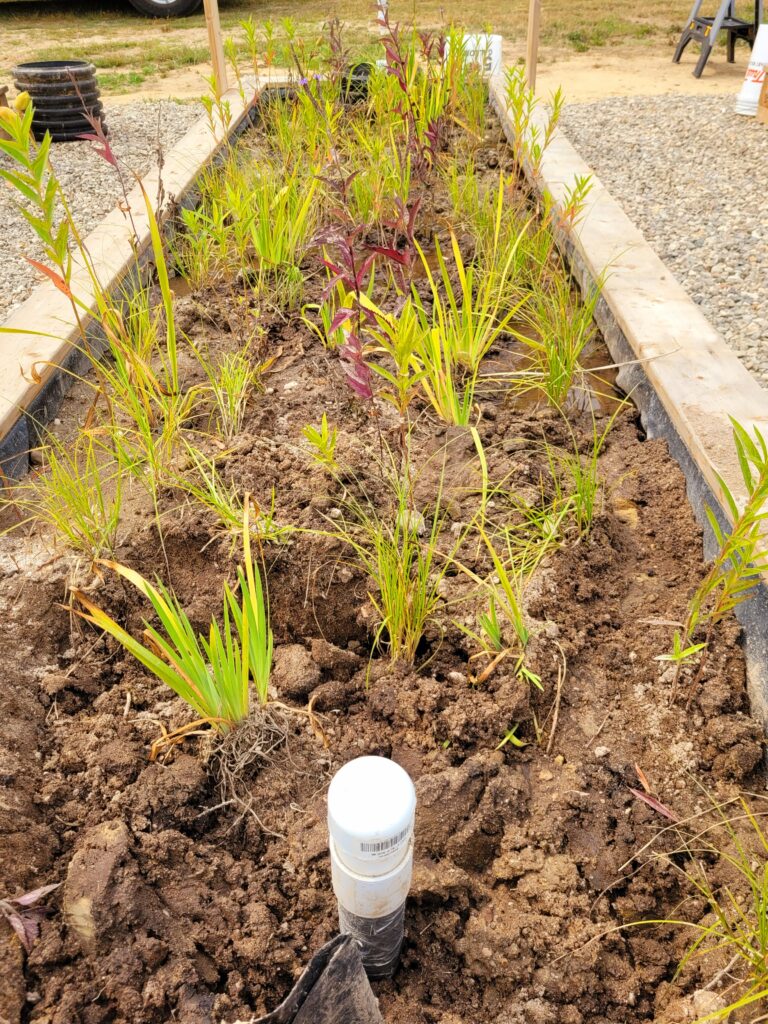
This mesocosm contains soil from the bogs and water that is between 1 and 12 inches deep to replicate a deep marsh ecosystem. This system includes native aquatic plants that contribute to removing nitrogen.
Includes plants:
Northern Blue Flag Iris versicolor
Fox Sedge Carex vulpinoidea
Swamp Milkweed Asclepias incarnata
Blue Vervain Verbena hastata
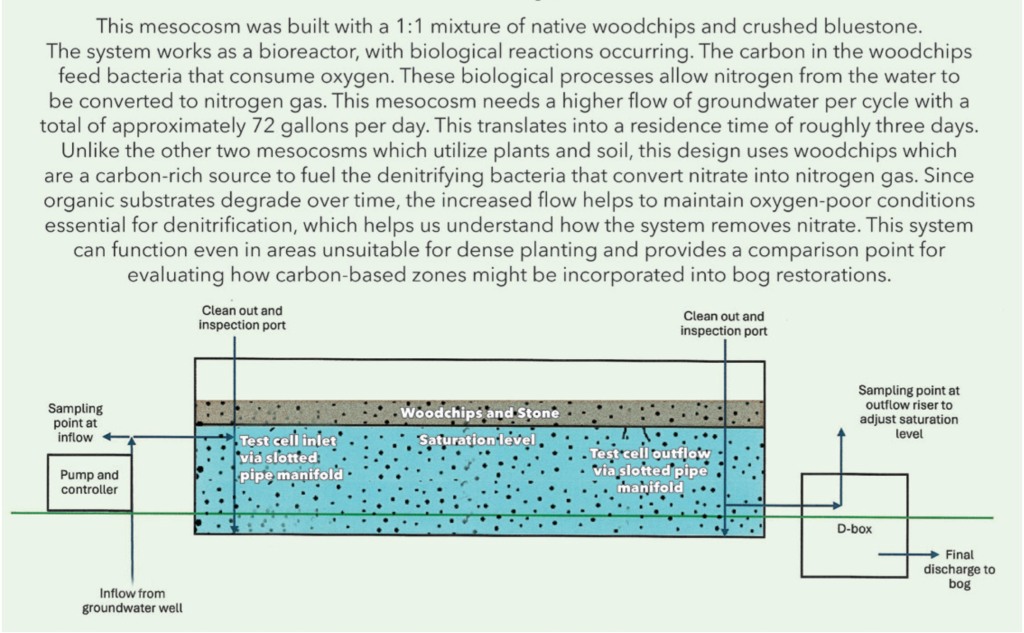
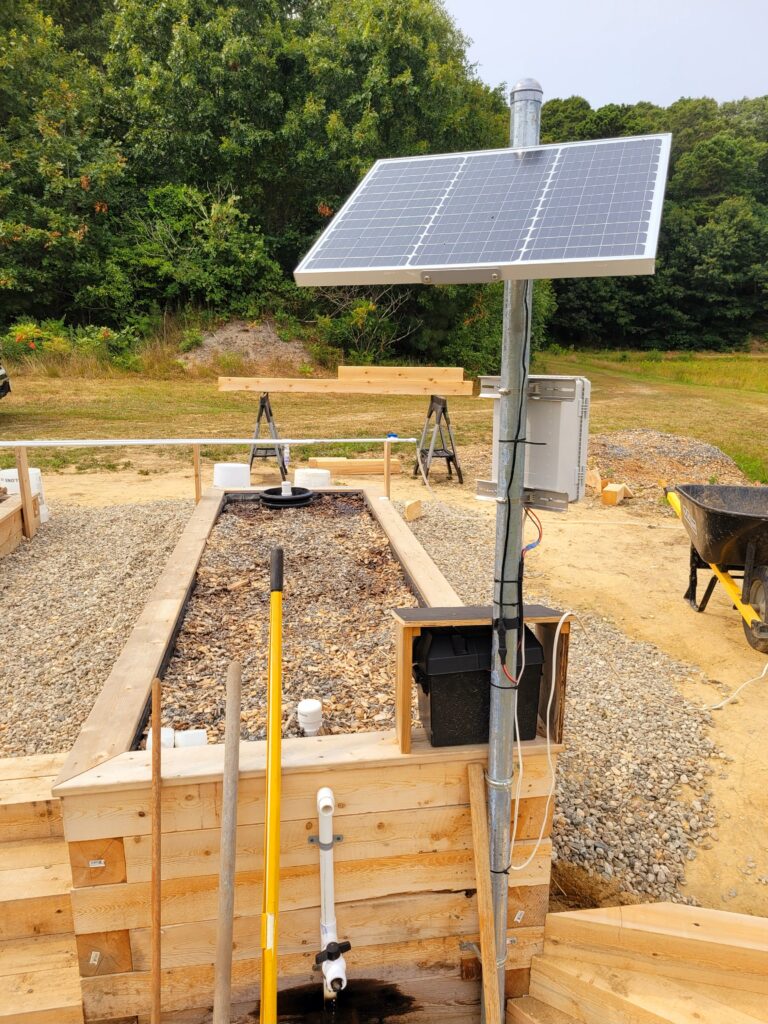
Woodchip/Stone Bioreactor
This mesocosm contains a mix of woodchips, stone and water. This system is working as a bioreactor, a system allowing biological reactions to occur. The carbon in the woodchips feeds bacteria that consume oxygen. These biological processes allow nitrogen from the water to be converted to nitrogen gas.
Mesocosms
Mesocosm 1: Shallow Emergent Wetland
Mesocosm 2: Subsurface Flow Wetland
Mesocosm 3: Woodchip/Stone Bioreactor
What We Learned
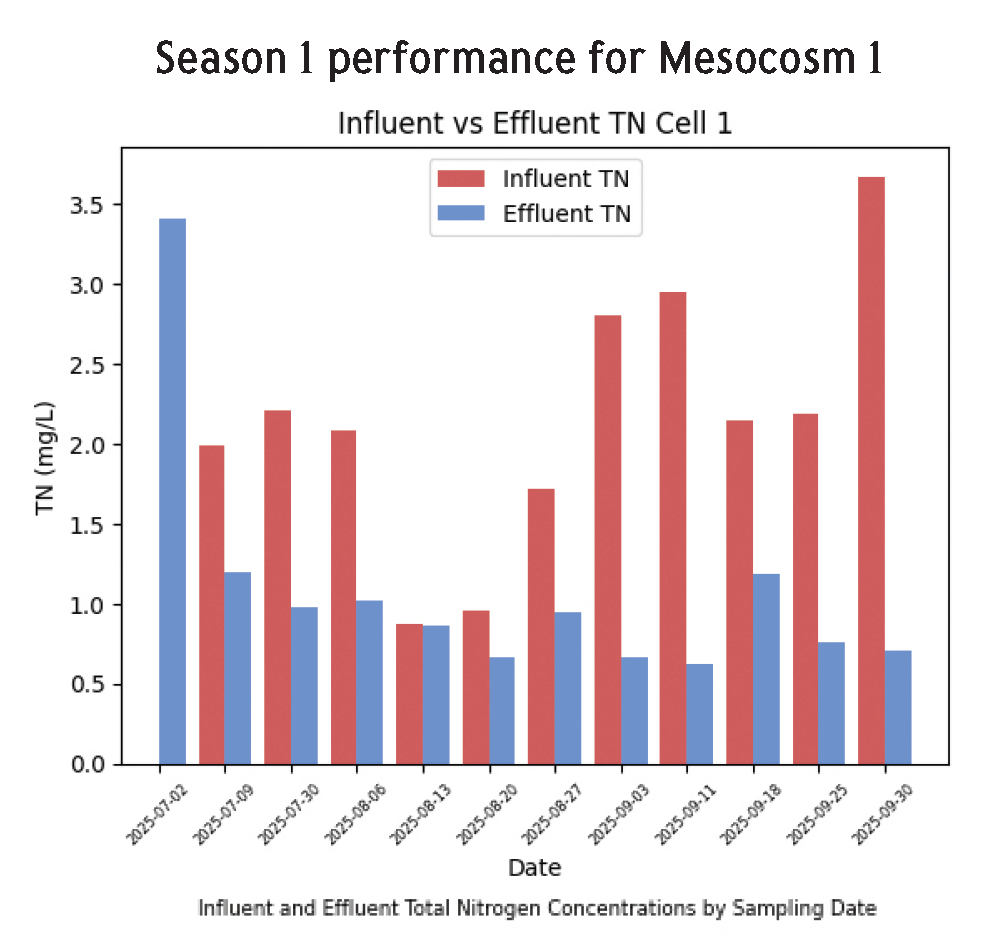
After 10 weeks of sampling, from the summer into fall, the mesocosms revealed clear trends in how different wetland designs process nitrogen-rich groundwater.
Both wetland mesocosms demonstrated exceptionally strong performance. With 78–83% reductions in nitrate and 47–54% reductions in total nitrogen, these systems showed how effective plant-based wetlands can be when residence times are prolonged and environmental conditions promote microbial activity. Vegetation remained robust and water levels required minimal intervention, a promising indication that these systems will be stable and resilient when scaled up.
The woodchip/stone bioreactor also performed well, removing 62% of nitrate and 22% of total nitrogen. Even without the presence of plants, the bioreactor proves to be capable of high rates of nitrate removal. This makes it an attractive option for use in areas where vegetation may struggle to establish.
One of the most interesting findings occurred during the dry September period, when nitrate concentrations spiked in the groundwater flowing into the mesocosms. With little rainfall, there is less clean water recharging and diluting the septic plume flowing into the bogs, leading to higher nitrogen concentrations. This discovery underscores the need for restoration designs that maintain performance during droughts.
What Does This All Mean
Wetland restoration is one of the most powerful nature-based tools available for improving water quality on Cape Cod. However, not all wetlands function the same, and small differences in depth, substrate, or flow can dramatically influence nitrogen removal performance. The mesocosms allow our team to compare different designs under identical environmental conditions, evaluate which configurations remove the most nitrogen by determining optimal flow rates and residence times, assessing plant survivorship, and refining structural elements before using in larger restoration projects. Basically, this project serves as the scientific test kitchen, the results of which can be used in future wetland restorations across the region.
BCWC’s cranberry bogs sit at the headwaters of the Marstons Mills River, the single largest source of nitrogen to the Three Bays estuary, where water reaches the bays in a matter of hours. Consequently, this restoration site offers one of the most immediate opportunities to improve water quality downstream.
The data generated through the mesocosm project is already guiding several aspects of the full-scale bog restoration. Across all three mesocosms, residence time is the most crucial factor. The longer water remains in contact with plant roots and microbial communities, the greater the opportunity there is for nitrogen to be absorbed, transformed, and ultimately removed from the groundwater. These findings are influencing how we shape meandering channels and various retention features. Observations about organic nitrogen are highlighting where carbon-based zones, like the woodchip/stone bioreactor, could enhance denitrification. Plant survivorship studies are informing which species will be reintroduced to create a resilient, native wetland community.