What to look for and how to protect yourself
and your pets from possible exposure.
Cyanobacteria blooms can look like green paint, pea soup, floating or submerged mats, small particles in the water, or a scum line on the shore. Cyanobacteria blooms are often blue or green, or sometimes brown, red, or white. Not every green particle in the water is cyanobacteria—pollen, sediment, and other naturally occurring organisms can look similar. But if the water looks suspicious, especially if children or pets will be in the water, choosing another pond is the safest option.
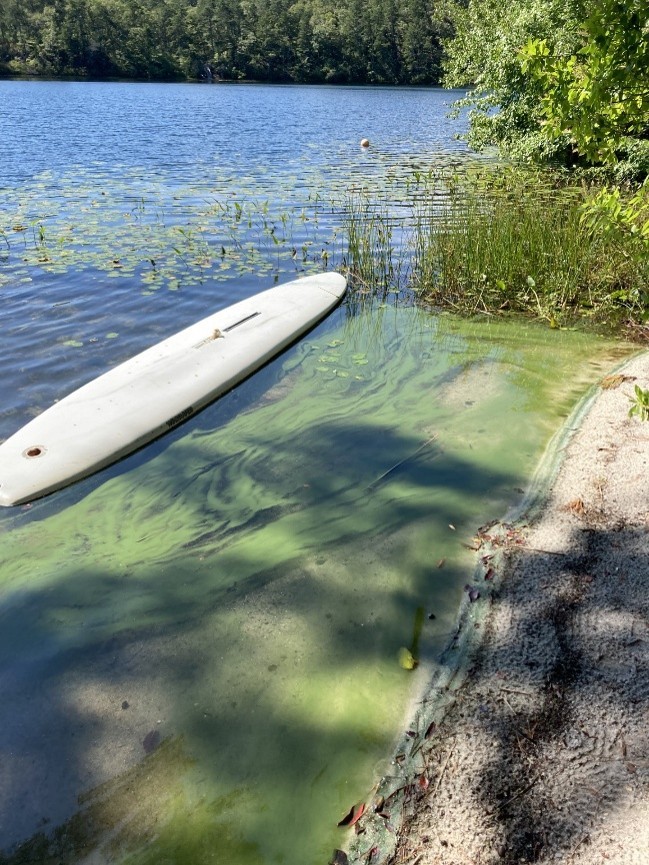
A thick green surface scum that looks like spilled paint is one of the most obvious signs of a cyanobacteria bloom (see Photo 1 below). However, blooms don’t always form a surface scum. As sunlight, wind, and water conditions change throughout the day, cyanobacteria may collect at the surface to form a scum or become mixed throughout the water, so a pond can look very different over the course of a day.
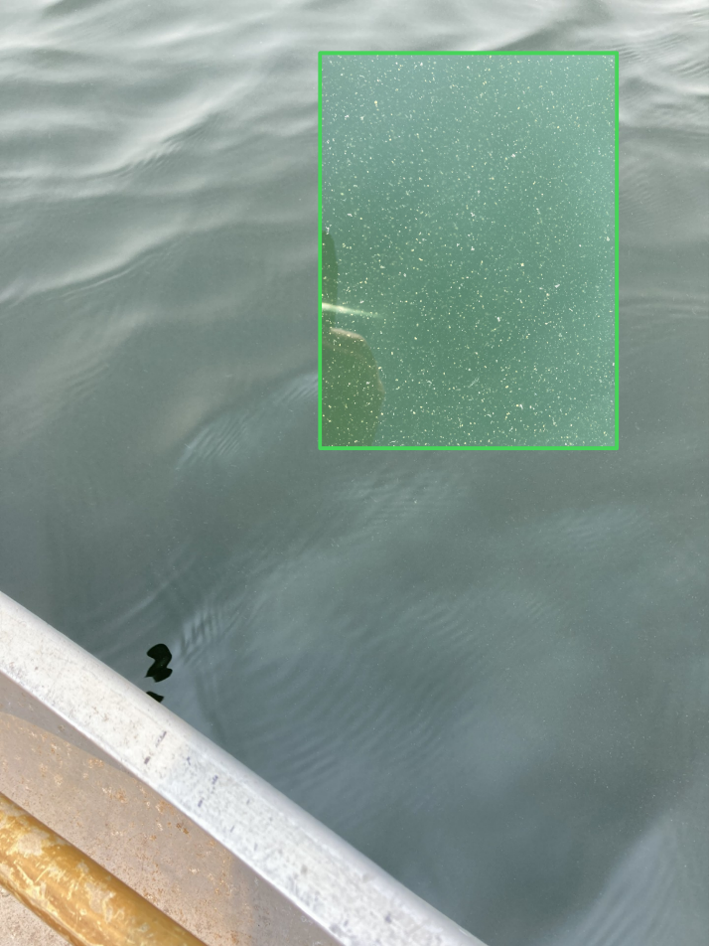
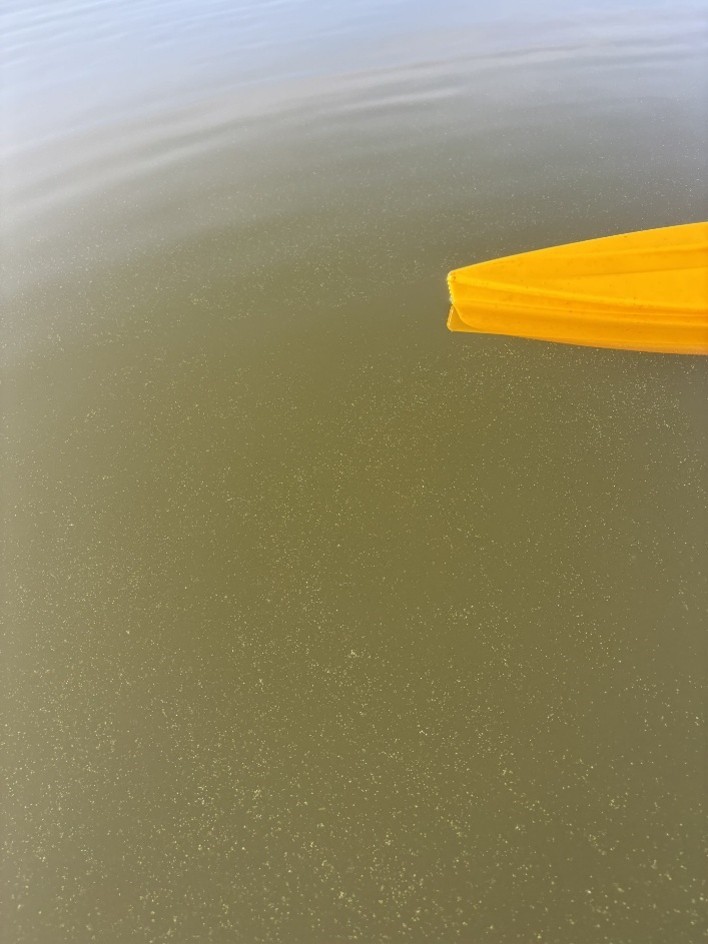
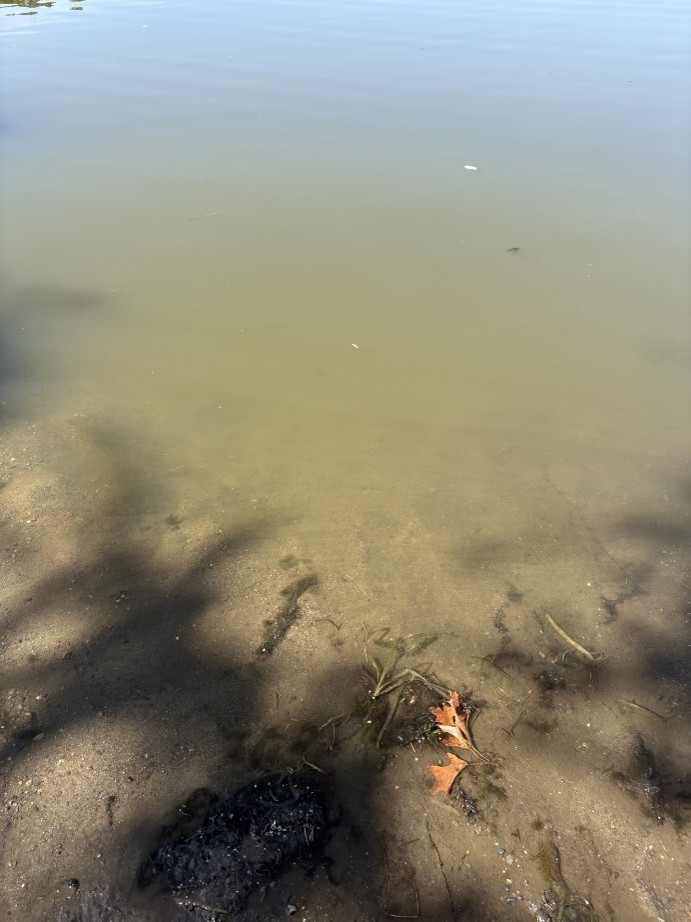
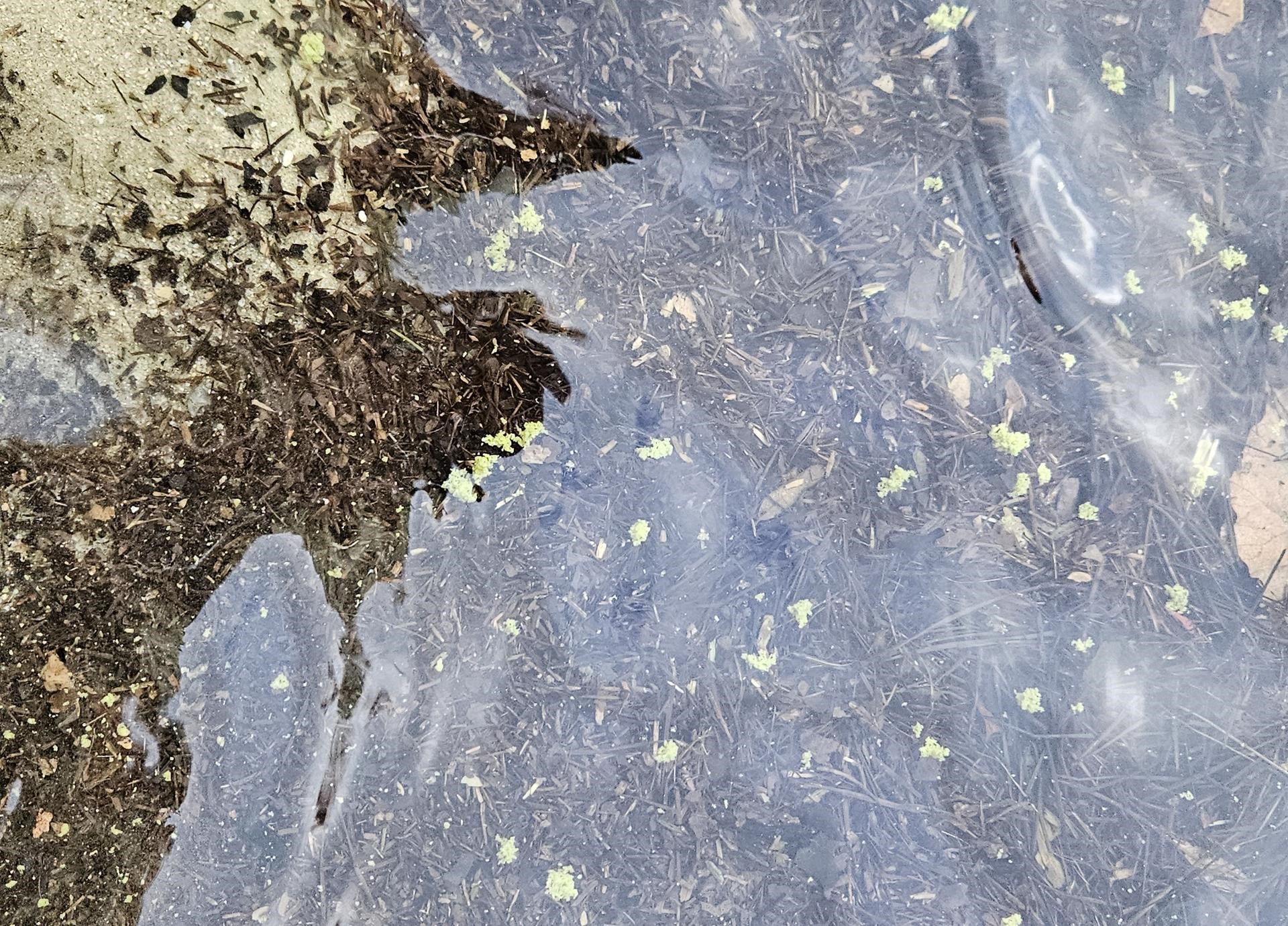
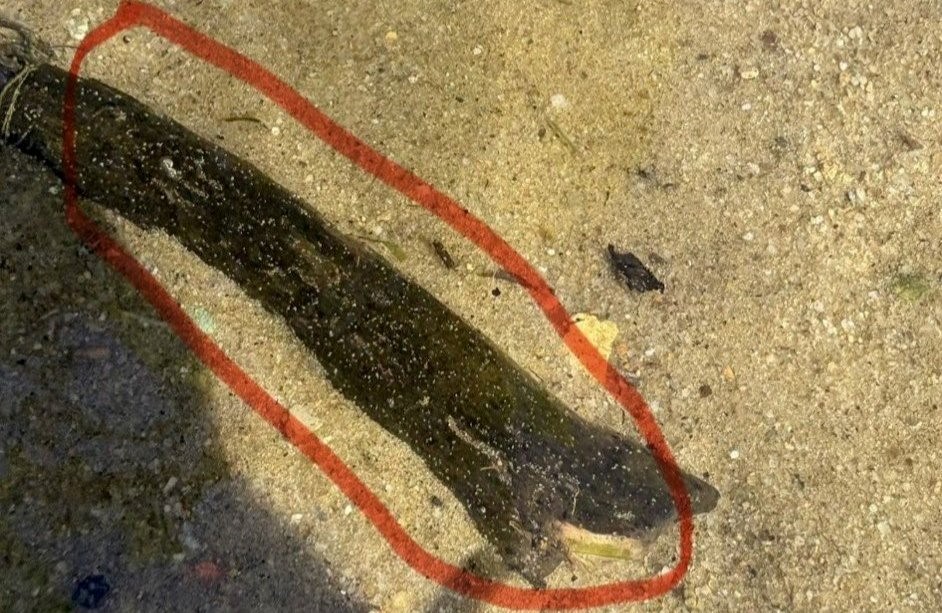
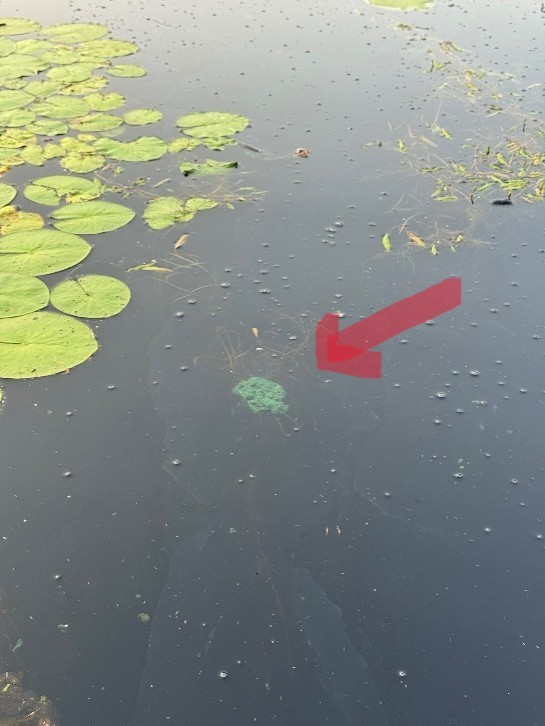
Cyanobacteria can also appear as many tiny green dots or particles suspended throughout the water (see Photos 2–5 below) and can make the water look green or cloudy. These particles are easier to spot in the water column against a dark background, like a stick or sediment, rather than light sand (see Photo 6 below).
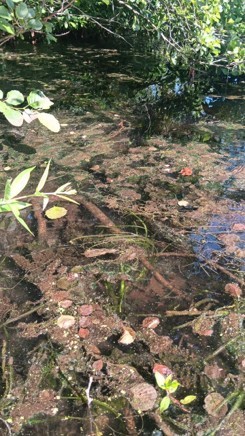
Cyanobacteria can also form benthic mats that can cover the bottom of a pond. Pieces of these benthic mats can come loose and float to the surface, which can be especially attractive, and therefore dangerous, to curious dogs. See photos 7 and 8 below for examples of what these pieces of benthic mat can look like.
If you notice any of these signs, it’s best to choose another pond that day.
The Massachusetts Department of Health offers this advice: When in doubt, stay out. We agree.
To help protect yourself and your pets:
Check the APCC cyanobacteria map for the latest information that we have before using a pond.
Keep your dog out of suspicious water, don’t let them eat washed up scum or algal mats, and always rinse them off with clean water after swimming.
Watch for posted water quality warnings at public access points at a pond and check APCC and Town websites for updated information.
Realize that you are the decisionmaker when it comes to contact with a pond. Educate yourself and use sound judgement.
If you think your dog has been exposed… immediately bring your dog to an emergency vet if they develop any of the following symptoms after swimming:
Lethargy, weakness
Loss of appetite
Vomiting, diarrhea, excessive drooling or foaming at the mouth
Pale or yellow gums
Blood in urine or stool
Stumbling, collapse
Difficulty breathing
Muscle rigidity and paralysis
Muscle tremors and seizures
Photo #1 - “Spilled paint” cyanobacteria scum
Photo #2 - Cyanobacteria presenting as fine green particles distributed densely in the water column.
Photo #3 - Cyanobacteria presenting as fine green particles distributed densely in the water column.
Photo #4 - Cloudy, green cyanobacteria bloom
Photo #5 - Floating green clumps
Photo #6 - Particles floating in the water column are easier to spot against a dark background.
Photo #7 - Floating pieces of benthic mat
Photo #8 - Floating piece of benthic mat
Photo #1 - “Spilled paint” cyanobacteria scum
Photo #2 - Cyanobacteria presenting as fine green particles distributed densely in the water column.
Photo #3 - Cyanobacteria presenting as fine green particles distributed densely in the water column.
Photo #4 - Cloudy, green cyanobacteria bloom
Photo #5 - Floating green clumps
Photo #6 - Particles floating in the water column are easier to spot against a dark background.
Photo #7 - Floating pieces of benthic mat
Photo #8 - Floating piece of benthic mat
Association to Preserve Cape Cod 482 Main St. Dennis, MA 02638 (508) 619-3185 https://apcc.org/
Cyanobacteria Series – #5 Benthic Cyanobacteria In this week’s installment of APCC’s cyanobacteria info series, we want to highlight a form of cyanobacteria that can
“When in Doubt, Please Stay Out.” A potentially toxic cyanobacteria bloom has been detected in: • Ashumet Pond, Falmouth/Mashpee The town has been notified of
Above: Skinequit Pond (left) and Bourne Pond (right), August 25, 2026 “When in Doubt, Please Stay Out.” A potentially toxic cyanobacteria bloom has been detected
Above: Ashumet Pond, Mashpee on August 24, 2026 “When in Doubt, Please Stay Out.” A potentially toxic cyanobacteria bloom has been detected in: • Ashumet