

Cyanobacteria Series - #4
Testing for Cyanotoxins
In our last installment of this cyanobacteria info series, we looked at why cyanotoxins can be present even when there is no obvious surface scum. This time, we want to take a closer look at cyanotoxin detection, and why understanding toxin presence involves more than a single test result.
There are many different cyanotoxins. Different species can produce different toxins, some can produce more than one, and some don’t produce toxins at all. Even different strains of the same species may differ in their ability to produce toxins. Scientists are still learning which cyanobacteria can produce which toxins, and how environmental conditions influence toxin production. Once released from cyanobacterial cells, some toxins can break down relatively quickly, while others may persist for days or weeks, depending on the type of toxin and environmental conditions.
So, what does a cyanotoxin test tell us?
A positive result tells us that a specific toxin was detected in a specific sample, at a specific location and time. A negative result tells us only that the toxin was not detected in that particular sample. It doesn’t tell us whether that toxin was present somewhere else in the pond or at another time. And because there are many different cyanotoxins, testing for one or two toxins cannot tell us whether other toxins are present.
Despite its limitations, toxin testing can still provide valuable information to inform decision-makers as part of a multifactor risk assessment process, especially when a toxin is detected. Public health agencies have established recreational health guidance for only a very few cyanotoxins. For others, there is evidence of potential harm, but not enough research yet to establish a health threshold with confidence.
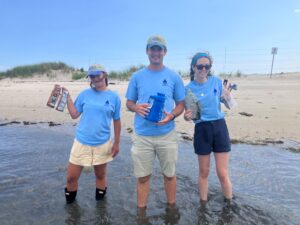
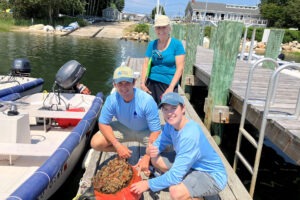
Here at APCC, we currently test for two of the three cyanotoxins for which Massachusetts has advisory levels: microcystin and anatoxin. We screen samples of concern for the presence or absence of the 2 toxins using rapid response strip tests at APCC and then send some negative and all positive samples to the Barnstable County Laboratory for confirmation and quantification.
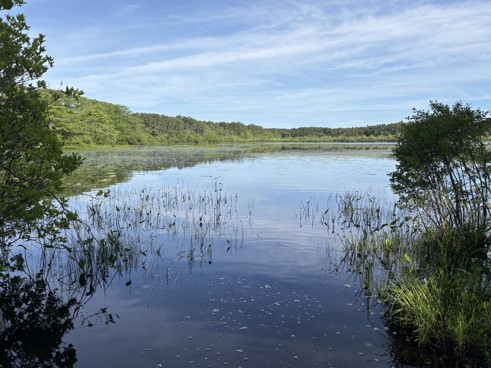
We have detected both microcystin and anatoxin in Cape Cod ponds, and this information has been useful to local town health agents as they make decisions about public health.
There is still much to learn, and we are continuing conversations with scientists who specialize in cyanotoxins about future collaboration to better understand the toxin-producing potential of the cyanobacteria in different Cape Cod ponds.
For more information on some of the better-studied cyanotoxins and their health effects, click here.
Association to Preserve Cape Cod
482 Main St.
Dennis, MA 02638
(508) 619-3185
https://apcc.org/