

Marstons Mills Cranberry Bog Eco-Restoration Project
Mesocosms
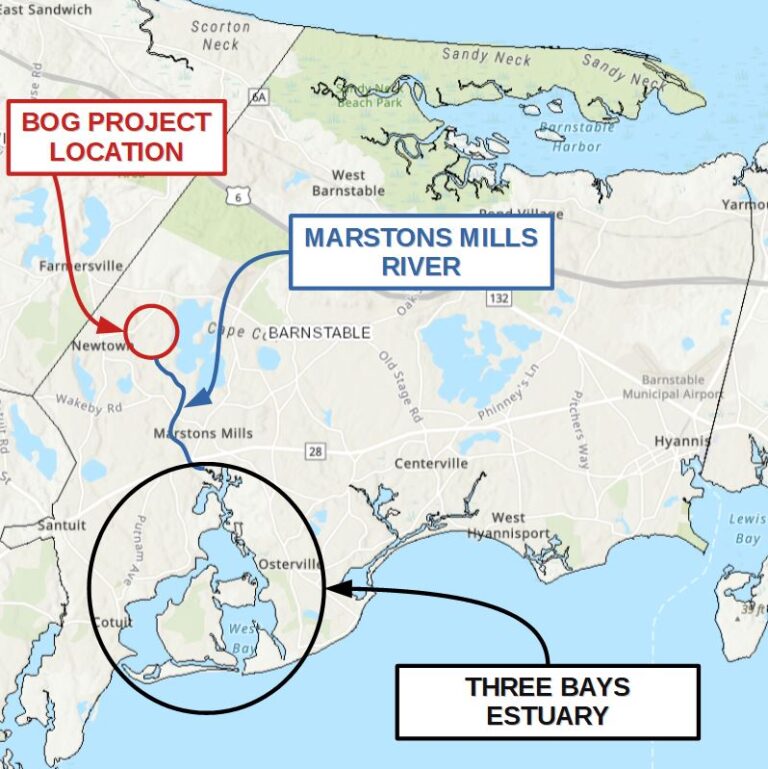

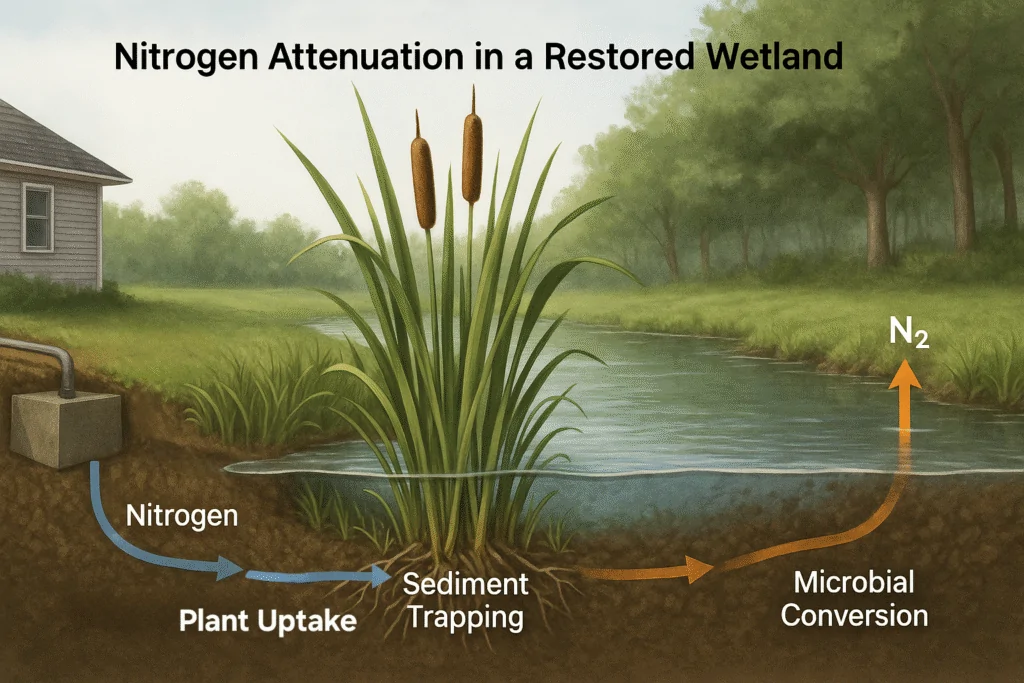
The Three Bays estuary was determined to be one of the most impaired estuaries on the Cape. Excess nutrients like nitrogen come from septic systems, stormwater and fertilizer, which cause algal blooms, fish kills and unsafe water for recreation. Barnstable Clean Water Coalition has been collecting water samples and associated data for years. Approximately 40% of the watershed’s excess nitrogen load flows through the Marstons Mills River. At the headwaters of the Marstons Mills River is approximately 150 acres of cranberry bogs. Our water quality data at the bogs shows that more than 8,000 kgs of nitrogen flows out from them into the Three Bays Watershed each year. The bogs are a collection area for the groundwater from much of the surrounding residential developments. The bogs could play a vital role in reducing the nitrogen load in our watershed.
To address water pollution in the Three Bays Watershed, BCWC is restoring 64 acres of retired cranberry bog farmland near the headwaters of the Marstons Mills River. Our goal is to reduce nitrogen loading to the Three Bays estuary by restoring this site to healthy, self-sustaining, and dynamic wetlands like those on Cape Cod pre-dating cranberry farming.
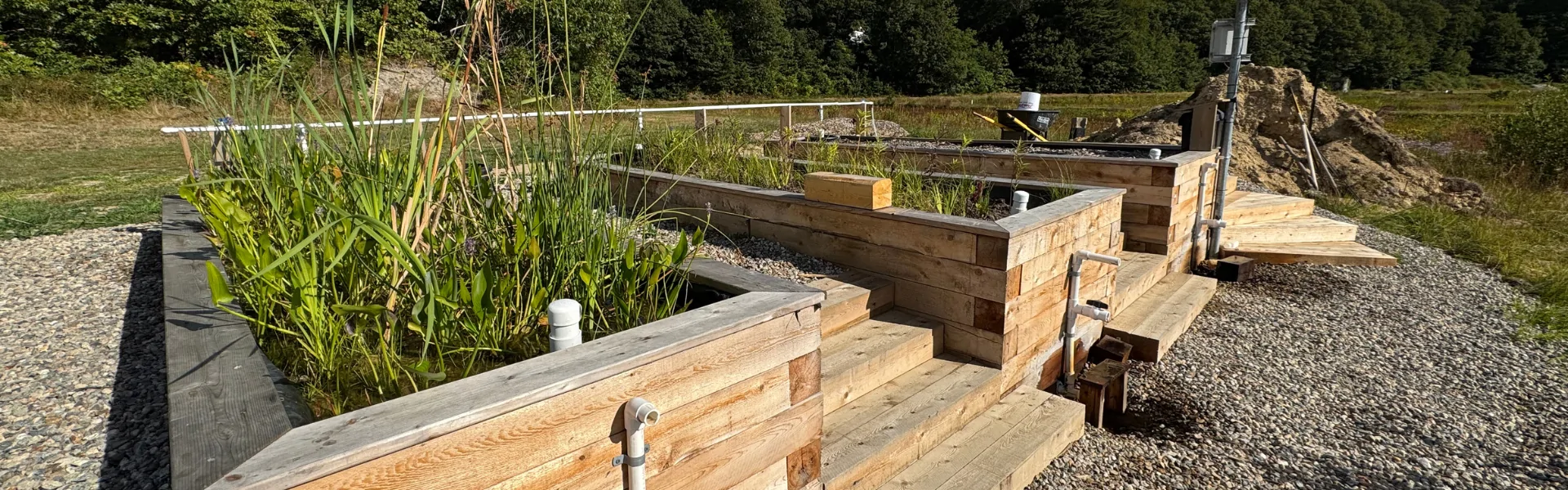
As part of this restoration, we are using mesocosms as a way to compare various wetland designs which more effectively reduces nitrogen. A mesocosm is a small-scale experimental system recreating a natural ecosystem for research, which in this case is nitrogen reduction. The results will determine which design is best for the larger restoration.
How does it work?
Two of the mesocosms contain soil from the bogs which includes sandy peat. This peat provides a perfect habitat for microorganisms that remove nitrogen from groundwater by turning it into harmless nitrogen gas. Peat is a dense bed of organic material found in the lower layers of the bogs. As the groundwater moves through these systems, the mixture of peat and microorganisms act as an organic filter, removing nitrogen and other pollutants.
We take weekly samples of the “influent” (before filtration) and “effluent” (after filtration).
Shallow Marsh Wetland
This mesocosm contains soil from the bogs and water that is between 1 and 3 inches deep to replicate a shallow marsh ecosystem. This system includes plants that thrive in shallow marsh conditions.
Includes plants:
- Swamp rose mallow Hibiscus moscheutos
- Swamp
- Broadleaf cattail Typha latifolia
- Pickerelweed Pontederia cordata
- Softstem bulrush Schoenoplectus tabernaemontani
Deep Marsh Wetland
This mesocosm contains soil from the bogs and water that is between 1 and 12 inches deep to replicate a deep marsh ecosystem. This system includes native aquatic plants that contribute to removing nitrogen.
Includes plants:
- Northern Blue Flag Iris versicolor
- Fox Sedge Carex vulpinoidea
- Swamp Milkweed Asclepias incarnata
- Blue Vervain Verbena hastata
Woodchip/Stone Bioreactor
This mesocosm contains a mix of woodchips, stone and water. This system is working as a bioreactor, a system allowing biological reactions to occur. The carbon in the woodchips feeds bacteria that consume oxygen. These biological processes allow nitrogen from the water to be converted to nitrogen gas.