Marstons Mills Cranberry Bog Eco-Restoration Project
Comprehensive Study Area
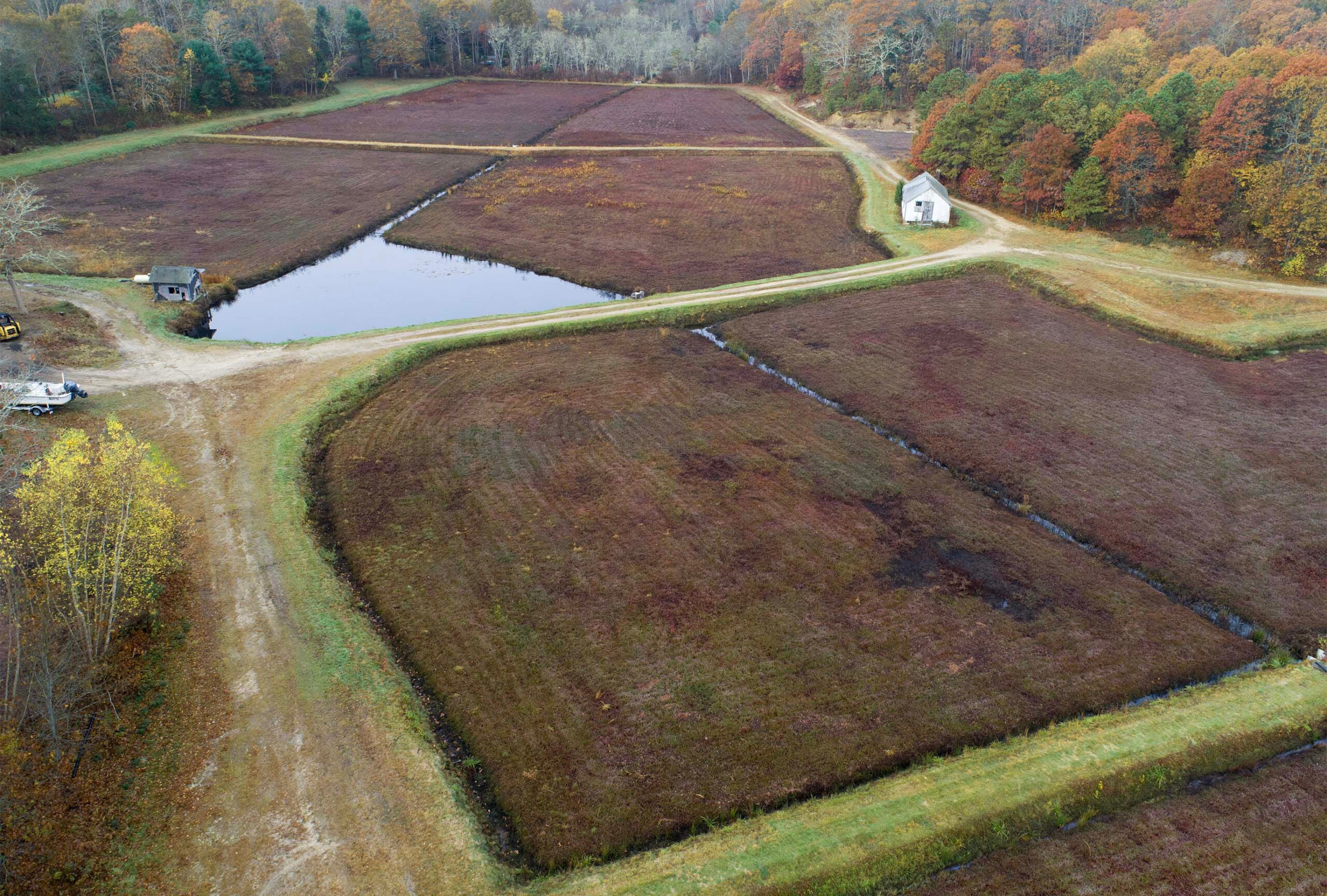
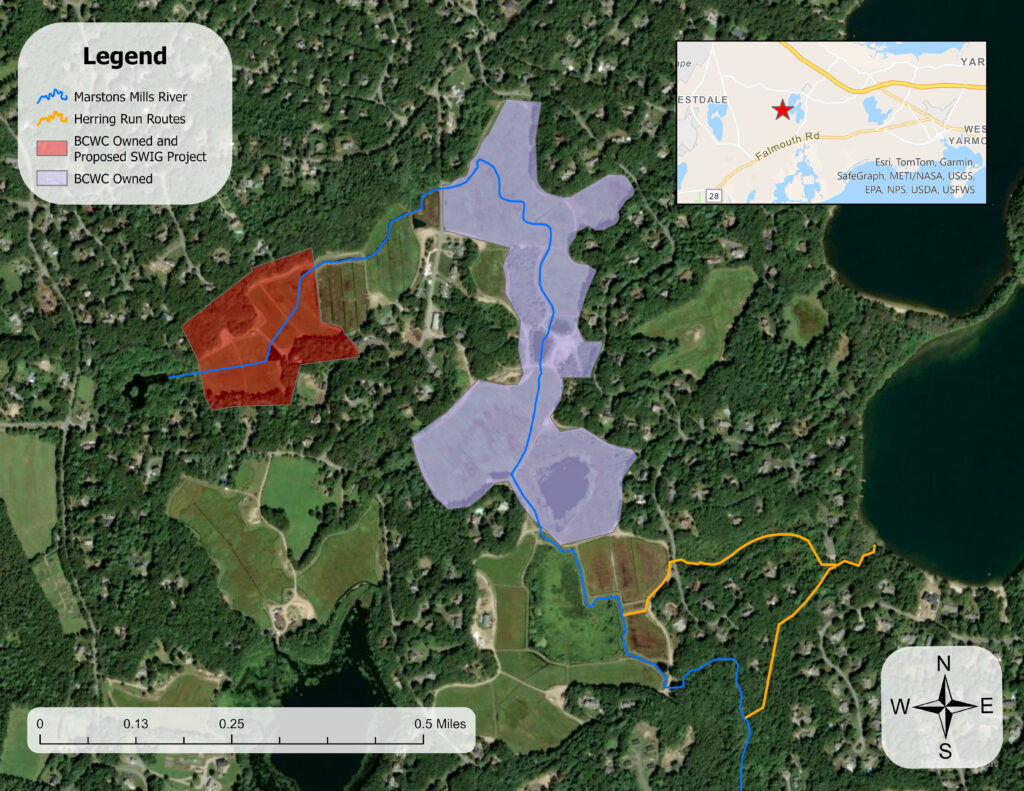
Barnstable Clean Water Coalition (BCWC) is pursuing a multi-stage ecological restoration of 64-acres of retired cranberry bogs in Marstons Mills. The Comprehensive Study Area (CSA) is a 10-acre portion of these bogs that will be used to develop a comprehensive “toolbox” for regional cranberry bog restorations. This test area is located near the headwaters of the Marstons Mills River (MMR). The MMR transits cranberry bogs, swamps, and a pond before entering the Three Bays estuary, the third most impaired estuary on Cape Cod due to nitrogen pollution. The excess nitrogen contaminating the groundwater is mainly from household septic systems. Fed by this groundwater, the river flow reaches the estuary in just six to eight hours.
The CSA is highlighted in red and the 47-acre eco-restoration site is highlighted in purple.
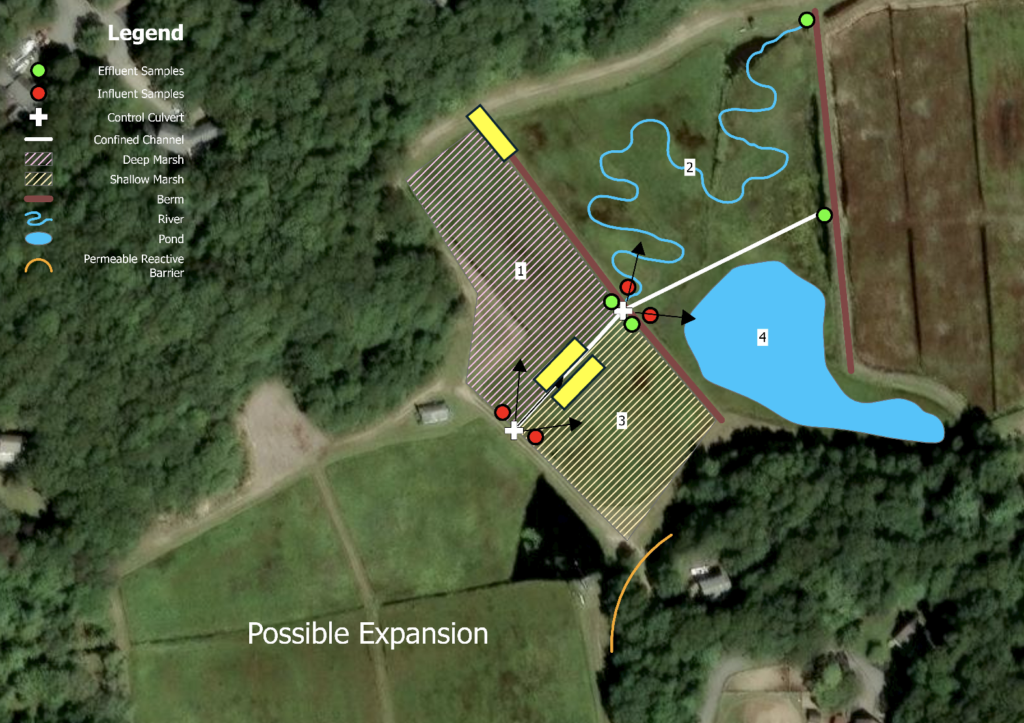
This project will provide an opportunity to study different approaches to cranberry bog restoration for the purposes of nutrient attenuation from a cost/benefit perspective. The plan being developed will design, build and monitor side-by-side restoration approaches in discreet miniature parcels within the CSA. These parcels will include shallow marsh, deep marsh, sinuous stream with associated wetlands, a pond, a wood chip Permeable Reactive Barrier and possibly an area with recirculated water using solar power. Each of these parcels would be “sized” based on water flow and separated in a manner that would allow for input and output measurements and monitoring. Each parcel would be carefully budgeted in terms of time and cost to both “construct” and “operate”.
This restoration and study will take approximately six years to complete and will result in an “eco-restoration roadmap”. Cost estimates for each unique approach will be applicable to other cranberry bog restorations and river systems on the Cape and across southeast Massachusetts.
This image shows a preliminary design of the CSA, which includes: 1. deep marsh (subsurface flow wetland), 2. sinuous stream, 3. shallow marsh (shallow emergent wetland), 4. shallow pond
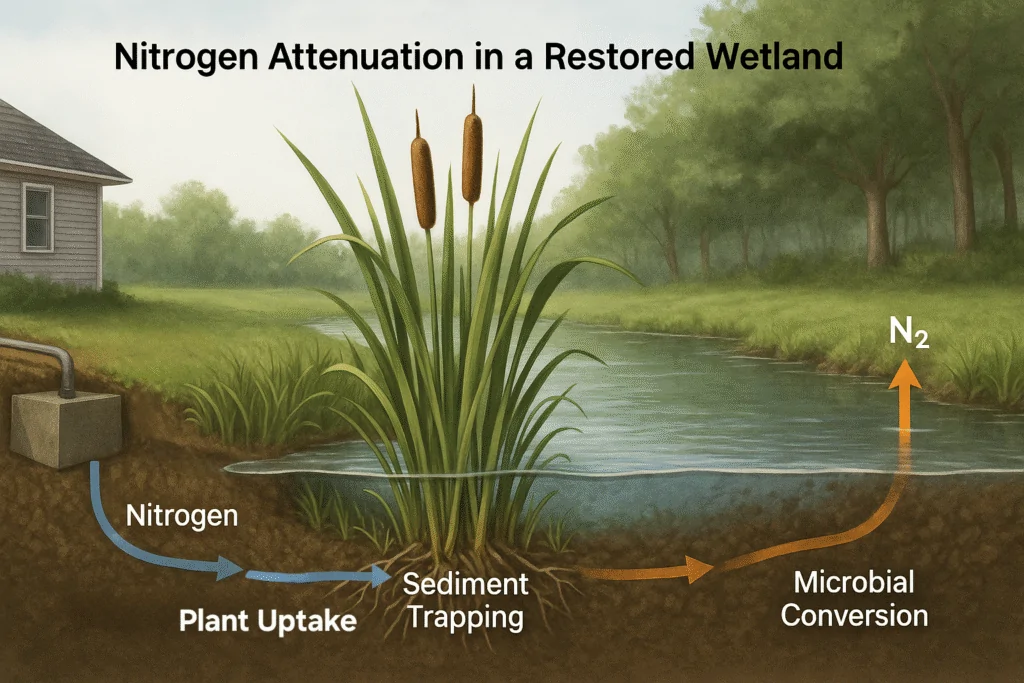
As part of the eco-restoration of the Marstons Mills cranberry bogs, BCWC is using mesocosms to compare the effectiveness of various wetland designs in removing nitrogen from the water flowing through the bogs. Mesocosms are smallscale experimental systems that recreate a natural ecosystem. Led by Water Resources Consultant Scott Horsley, three mesocosm structures were built adjacent to the bogs that are within the Comprehensive Study Area (CSA).
These 12 ft. long by 3 ft. wide and 3 ft. deep cells simulate different wetland restoration designs, allowing us to measure nitrogen removal in a controlled, reproducible environment. Groundwater is pumped from a 30-foot deep well into all three mesocosms. Flow and residence time are controlled through a fixed hydrologic system with the water being tested as it flows in and out of each mesocosm. The findings will help determine which wetland designs are more effective at nitrogen attenuation. This data will inform the design of BCWC’s CSA project, as well as being used for bog restorations in other locations.